
Introduction
Have you ever thought about the simple act of breathing? It wasn’t until recently that I realized how important our breath is to our overall health. As I explored more into the realm of yoga’s numerous limbs; asana, pranayam, meditation, mindfulness, and self-care, I came to a captivating discovery: my own breathing pattern was shallow, and it was influencing me in more ways than I could have anticipated. The pattern resulted in doctor’s appointments and insufficient sleep.
Since Dec-2018, when I first started my regular pranayam practice along with inner engineering rituals there was gradual improvement in my health and as I learnt the concepts deeper along with the anatomy and physiology of breathing, I realized that stress of modern life was possibly the root cause and I was determined to heal myself by tapping into the largest pharmacy of the world, that which resides within us.
The Journey
I was intrigued and began to investigate the benefits of deep breathing, which led me on a path of self-discovery and development. I began studying my breath with my felt sense and realized that my breathing was mostly limited to my chest, ignoring the deep diaphragmatic breaths that our bodies are supposed to take. I set out on a quest for deep, nourishing breaths, determined to break away from this restricted style of breathing. The first step was to do various forms of pranayam and breath-work every morning. But the toll of years of stress needed to be jolted, so the second step was to incorporate pranayam into my everyday routine, whether waiting in the lift or during short gaps between two appointments or funnily enough on a shopping trip with my family where they took their time choosing what they want, I used to stand beside them and practice diaphragm breathing.
Do you want to take a test RIGHT NOW?
- Interesting enough have you ever observed the breathing rhythm of a newborn who is fast asleep? If not, seize the first opportunity and you will notice that as the baby inhales, its belly rises like a balloon, and when it exhales, the tummy flattens, with very little lung activity.
- While you’re reading this, put one hand on your tummy and the other on your chest and watch your breathing pattern. You might be surprised to see that the tummy goes in as you inhale and comes out as you exhale. OR perhaps your breathing is shallow enough that your diaphragm is not playing tag with your breath.
- Finally, if you like, you may look up your BOLT score, the ability to hold breath after an exhalation. According to Oxygen Advantage, a BOLT score of 40 (seconds) is ideal, but a lower number is never a cause for concern.


The science behind this breathing
Based on my readings and the seminars in my course at https://www.makesomebreathingspace.com/ where I am undergoing graduation as a certified international breath work facilitator, here is the science behind shallow and deep breathing.
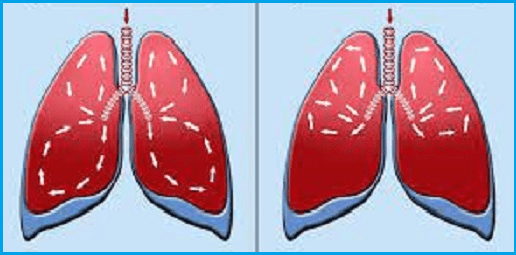
The neuroscience behind thoracic breathing (shallow chest breathing) and abdominal breathing lies in the way these different types of breathing patterns impact the body’s nervous system.
When we engage in thoracic breathing, we activate the sympathetic nervous system, which is responsible for the body’s “fight or flight” response. This can lead to feelings of stress, anxiety, and tension. Thoracic breathing can also lead to shallow breathing, which can cause a decrease in blood oxygen levels.
In contrast, when we engage in abdominal breathing, we activate the parasympathetic nervous system, which is responsible for the body’s “rest and digest” response. This can lead to feelings of relaxation, calmness, and reduced tension in the body. Abdominal breathing can also increase blood oxygen levels, improve heart rate variability, and decrease the production of stress hormones.
Studies have shown that practicing abdominal breathing can lead to changes in brain activity, including increased activity in the prefrontal cortex, which is responsible for higher-order cognitive processes such as decision-making and problem-solving. Abdominal breathing has also been shown to reduce activity in the amygdala, a part of the brain that is associated with fear and emotional processing.
The Outcome
I noticed a significant transformation over time. My sleep improved, as did my capacity to relax and find peace amidst life’s challenges. As I embraced deep breathing as a daily practice, my lung capacity increased, giving me with a renewed sense of vitality and endurance. My BOLT score is much better now. Through my journey from shallow to deep breathing, I realized that our breath holds the power to unlock our physical and mental well-being. The simple act of breathing mindfully became a gateway to a more vibrant and harmonious life, one where stress is managed, energy is restored, and peace becomes an ever-present companion.
Join me as I go deeper into the profound power of breathing and investigate the strategies and practices that can assist us in harnessing the transformational power of our breath. Let’s go on a voyage of self-discovery together and explore the power of deep breathing. I will post some breathing techniques in the next blog.
Tushar Ratanghayra, a follower of 8 limbs of Yoga.


 Awaken with Yoga